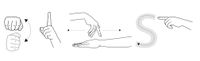
The Smart Improv method is a form of conducted improvisation in which a conductor guides musicians using hand and arm signs. The conductor composes ‘in the moment’ by giving instructions and responding to the music.
The Smart Improv method includes 22 Basic Signs and 40 signs based on improvisation techniques used in music therapy, as described by Kenneth Bruscia (1987) and Tony Wigram (2004).
The 22 Basic Signs focus primarily on musical parameters. For example, the conductor can request a rhythm, a melody, an ostinato, a chord progression, a transition to a new section, a particular scale, or a specific dynamic level.
The 40 signs based on improvisation techniques used in music therapy each represent a specific technique, such as playing a reflection, matching another player, completing a musical phrase, providing rhythmic structure, establishing a musical framework, or taking on a particular role.
The Smart Improv method can be used to work toward the following goals:
S- Strengthen solfège skills
M- Musically respond to what is being played
A- Apply music theory in practical ways
R- Respond and listen to others
T- Train and implement the techniques of Bruscia and Wigram
I - Instant composing
M - Manage and lead a group
P - Play and improvise on different instruments
R - Refine your sense of time and structure
O - Open up to creative expression
V - Voice musical ideas freely and collaboratively